The Best Contractors Are Investing in Dye-Sealant Solutions
1) Leak work is expanding, and it’s getting more documented
EPA’s Emissions Reduction & Reclamation (ER&R) program has kicked in as of 2026 for certain systems to be in compliance with leak-rate thresholds plus recordkeeping/reporting expectations.
Separately, the rule text for ER&R leak repair lays out the core workflow: calculate leak rate, conduct a leak inspection, repair, and meet timelines (30/120 days depending on situation).
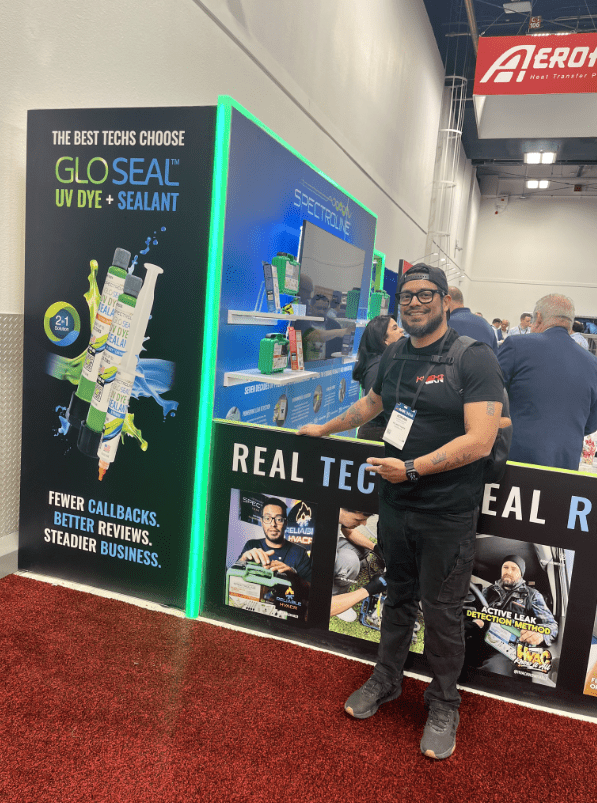
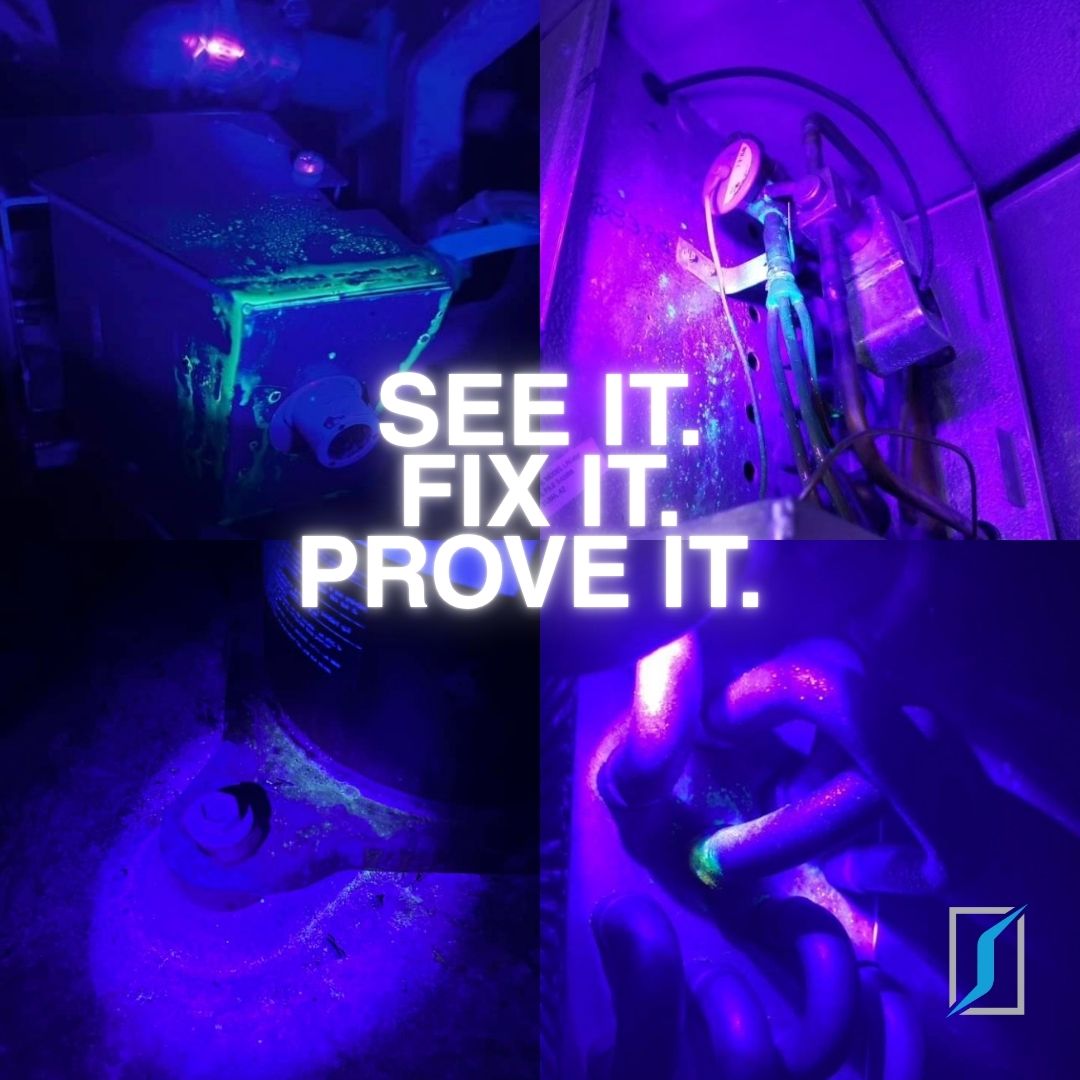
Why Spectroline: Our dye is a “proof tool” (clear visual confirmation + photos), and sealant is a “keep-it-running” option customers ask about to reduce refrigerant loss and downtime.
2) The rate and cost of leaks are a bigger deal to owners now more than ever before
AHRI notes that refrigerant loss meaningfully impacts efficiency, and cites the EPA that U.S. supermarket systems lose ~25% of charge annually on average.
Why Spectroline: Customers increasingly want solutions that find leaks faster そして reduce repeat loss, which is exactly the value proposition of our dye + sealant combo, GLOシール.
3) You’ll run into more “pre-treated” systems—and it affects your process
As more techs/companies adopt dye+sealant, you’ll show up on jobs where it’s already in the system. That changes:
how you verify leaks,
how you quote the repair (“we can see it”),
and how you protect your equipment
4) The wrong sealant can put your recovery equipment at risk
Most sealant and dye products react with moisture or oxygen. This is a dangerous choice, especially as moisture is a common contaminant in air conditioning systems. These products polymerize, form solids, and once solids are formed, they cannot be flushed out. The entire system may need to be replaced at that point. GLO Seal™ is an oil-soluble formula that will not polymerize or cause blockage/damage to the system. Explore our GLO Seal advantage here.
A simple “show-up” checklist for techs (when dye/sealant use is rising)
Ask + look: “Has any dye or sealant been added?” Check service tags/notes.
Protect your machine first: use an input filter drier, and consider a sealant check when history is unknown. While GLO Seal is a clean, system-safe option, not everyone knows to use this particular kind of sealant.
Use Spectroline dye as documentation: UV inspection + photos = easier customer approval + cleaner service records (especially where leak work is time-bound and documented).
Set expectations: sealant can be appropriate for certain micro-leak scenarios, but it’s not a substitute for repair on every system—so your judgment (and disclosure) matters.

(https://www.futuremarketinsights.com/reports/leak-detection-dyes-market, https://dataintelo.com/report/hvac-adhesives-and-sealants-market) Tweet
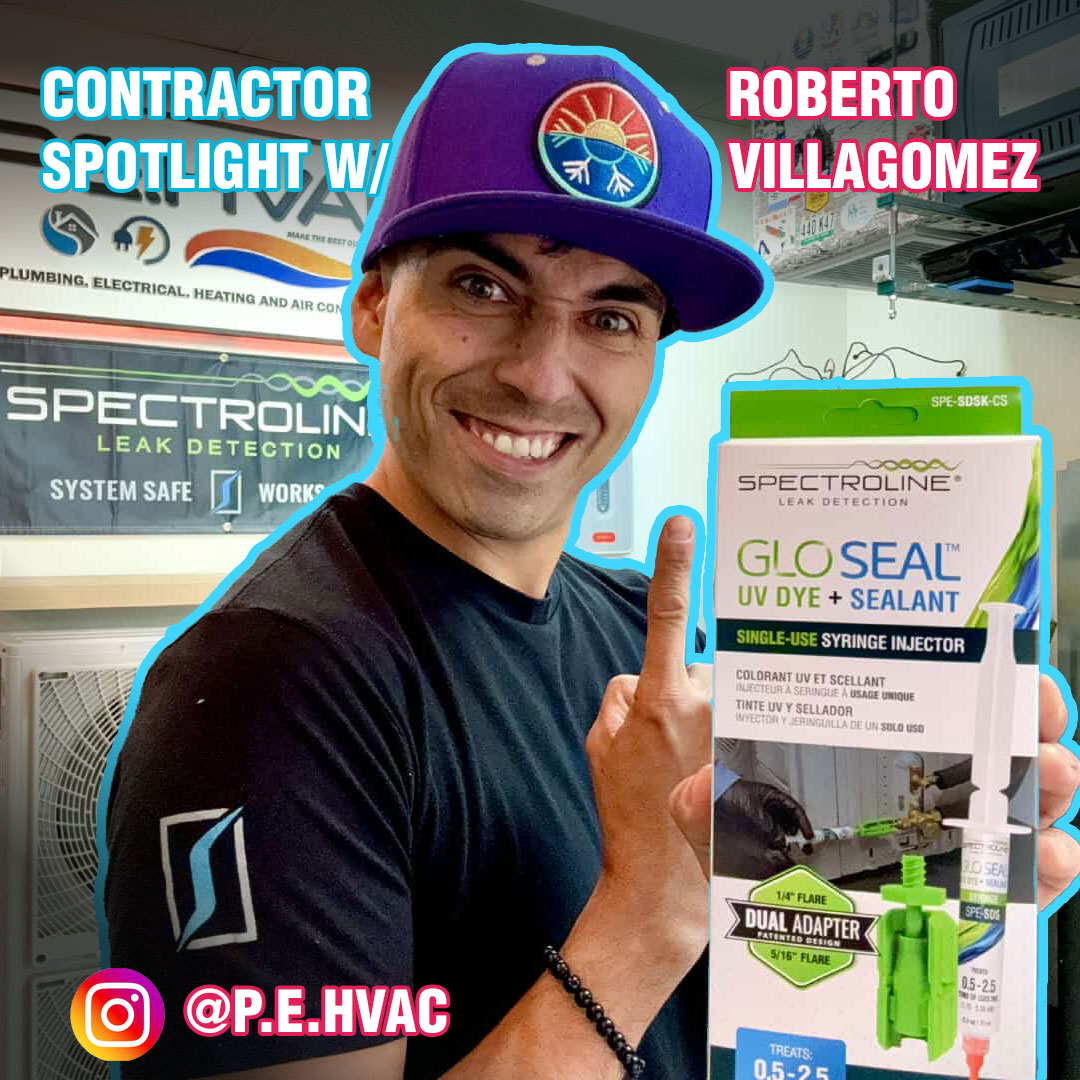
More systems are being treated with dyes, and more jobs demand airtight, long-lasting performance—so the winning approach is faster leak location plus a reliable seal. GLO Seal helps techs see the leak, fix the leak, and move on with confidence. We’ve gotten feedback from the best of the best HVAC technicians in the industry, and all of them have one thing in common: they keep GLO Seal close by! See what they are saying here.