
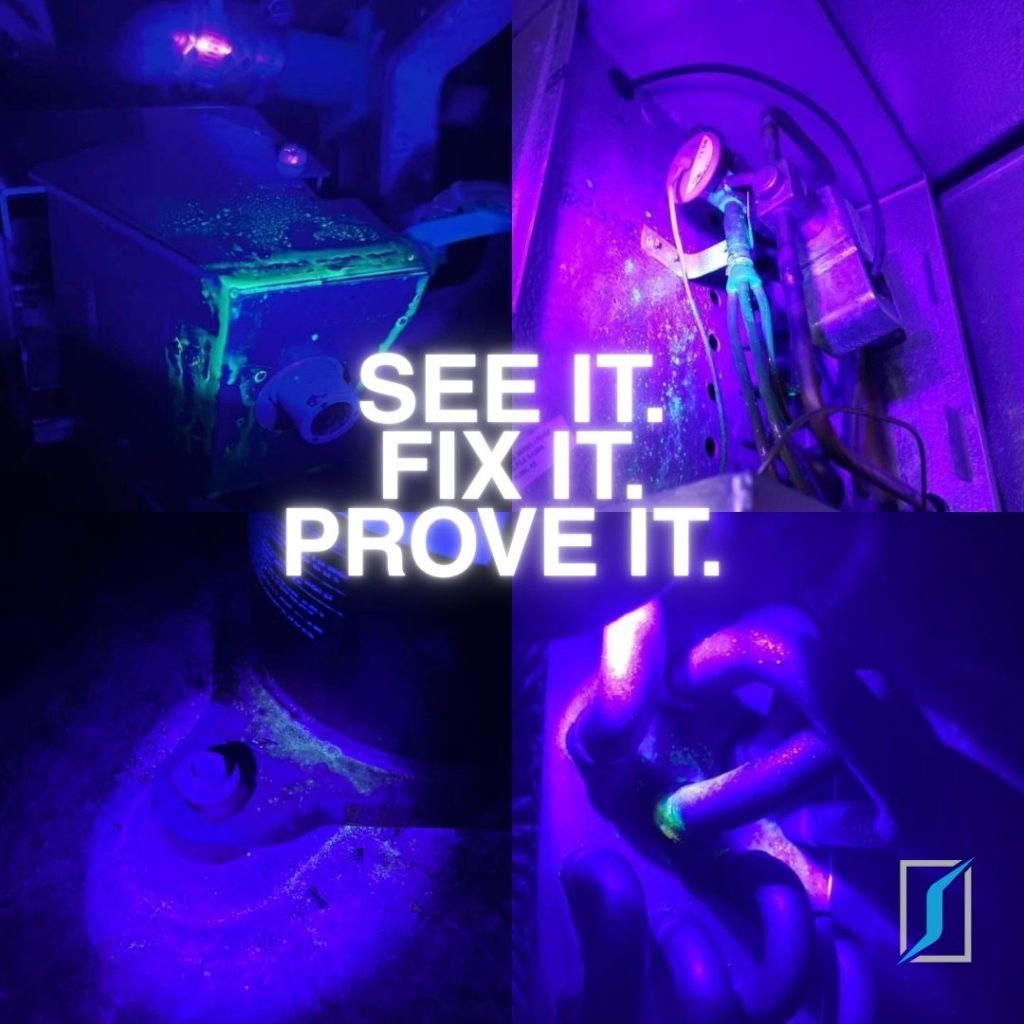
Why HVAC Refrigerant Leaks Are Difficult to Find
Refrigerant leaks rarely appear as obvious failures. Most systems continue to operate while gradually losing efficiency. Because leaks often occur at fittings, vibration points, or micro-fractures in copper lines, they can be extremely small and difficult to locate using traditional inspection methods.
Technicians frequently encounter situations where pressures appear low but no visible oil residue is present. This results in repeated service visits, refrigerant recharging, and unresolved system performance issues.
How UV Dye Leak Detection Works
UV dye leak detection involves injecting a small amount of fluorescent dye into the system’s circulating oil. The dye travels with the refrigerant and escapes precisely at the leak point.
When inspected with a UV lamp, the dye glows brightly, clearly identifying the exact leak location — even for pinhole leaks.
This allows technicians to:
• visually confirm the leak
• repair the correct component
• avoid unnecessary part replacement
Advantages Over Electronic Leak Detectors
Electronic leak detectors are useful but often produce false readings due to airflow, contaminants, or residual refrigerant in enclosed spaces.
UV dye detection provides:
• visual confirmation
• permanent proof of repair
• no guessing or interpretation
After repair, the technician can reinspect the system to verify that no dye is escaping, confirming the leak has been fully resolved.
Preventive Maintenance Benefits
A small amount of dye remains in the system after repair. If a future leak develops, it becomes immediately visible during inspection.
This allows facilities and service companies to:
• reduce repeat callbacks
• lower refrigerant usage
• improve service documentation
• support maintenance programs
Environmental and Regulatory Considerations
Refrigerants contribute to greenhouse gas emissions when released into the atmosphere. Identifying leaks quickly reduces emissions and helps facilities meet regulatory and compliance requirements.
Accurate leak detection not only protects equipment but also supports responsible system operation and environmental stewardship.